
Table of Contents
I have a confession.
For years, I owned both a French press and an AeroPress. They sat side by side on my kitchen counter like rival siblings, each begging for attention. Some mornings I chose the French press—slow, ritualistic, comforting. Other mornings I grabbed the AeroPress—fast, precise, almost scientific.
But if someone had asked me, “Which one should I buy?” I couldn’t have given a straight answer.
So I did what any obsessive coffee person would do. I spent three months brewing side by side, taking notes, timing everything, and subjecting willing (and unwilling) friends to taste tests.
Here’s what I learned.
The Short Answer
If you only have 30 seconds:
- Buy the French Press if: You want bold, full-bodied coffee with rich mouthfeel, you’re brewing for multiple people, and you don’t mind a little sediment at the bottom of your cup.
- Buy the AeroPress if: You want clean, bright, smooth coffee with no grit, you value speed and easy cleanup, and you love experimenting with different brewing styles.
Still undecided? Let’s dive deep.
A Quick History Lesson
The French press has been around for over a century. It’s a classic for a reason—simple design, no moving parts, just glass (or steel), a mesh filter, and a plunger. It’s the kind of device your grandparents might have used, and it still makes fantastic coffee.
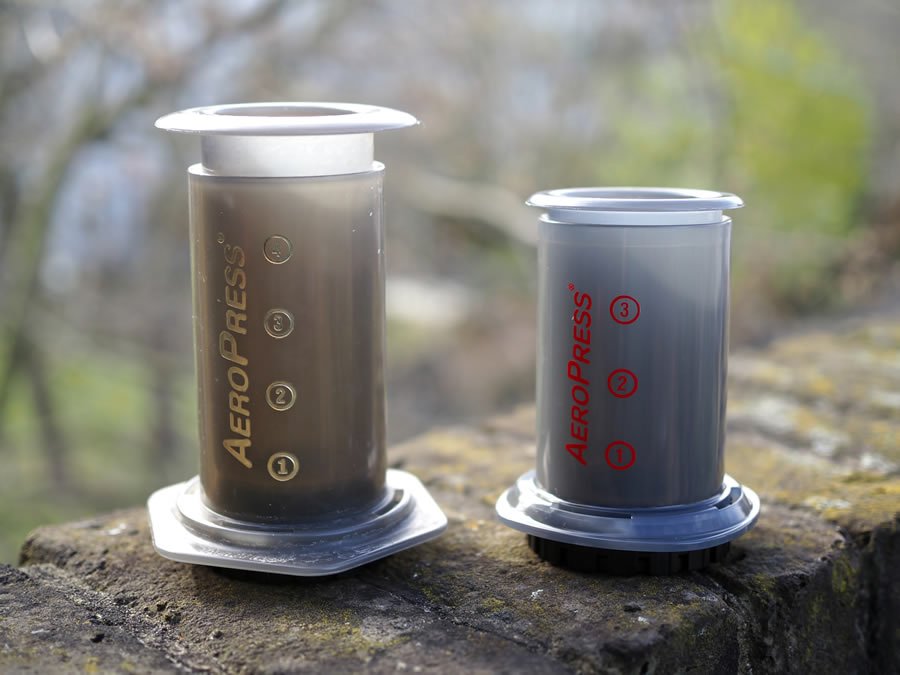
The AeroPress is the new kid. Invented in 2005 by Alan Adler, a Stanford engineering instructor who set out to make a better cup of coffee, it looks like something from a chemistry lab—a plastic chamber, a plunger, and paper filters. But don’t let the appearance fool you. It has a cult following, complete with world championships and hundreds of experimental recipes.
Head-to-Head Comparison
Let me break this down the way I wish someone had explained it to me years ago.
Brewing Method
French Press: Pure immersion. You dump coarsely ground coffee into the carafe, add hot water, wait 4 minutes, and press the plunger down. The metal mesh filter separates the grounds from the liquid, but it’s not super fine—oils and tiny particles get through.
AeroPress: Hybrid method. You steep coffee briefly (30-60 seconds), then use gentle air pressure to push the water through a paper filter. This combination of immersion and pressure extracts flavor quickly and efficiently.
My take: The French press is passive and forgiving. The AeroPress gives you more control but asks for more attention.

Taste and Mouthfeel
This is where the difference really shows up.
French Press coffee is:
- Full-bodied and rich
- Oily and textured
- Bold, sometimes earthy
- Can have a slight grittiness from fine particles
AeroPress coffee is:
I did a side-by-side test with the same Ethiopian Yirgacheffe beans. The French press brought out chocolate and blueberry notes with a heavy body. The AeroPress highlighted lemon zest, jasmine, and honey—flavors I barely noticed in the French press version.
My take: Neither is “better.” They’re just different. French press for cozy, bold mornings. AeroPress for when you want to taste every nuance of a special bean.
Grind Size
French Press: Needs coarse grind—like breadcrumbs. Too fine and you’ll get muddy coffee and an impossible-to-plunge mess.
AeroPress: Works best with medium-fine grind, like table salt. But here’s the magic: it’s flexible. You can use coarser or finer and adjust your recipe accordingly.
My take: If you only have a blade grinder that makes uneven grounds, the AeroPress is more forgiving. The paper filter catches inconsistencies that the French press would let through.
Brew Time
French Press: About 4-5 minutes from start to finish. You can’t rush it—the coarse grind needs that long to extract properly.
AeroPress: About 1-2 minutes total. On hectic mornings when I’m running late, this matters .
My take: AeroPress wins for speed. But sometimes I want those 4 slow minutes to stare out the window before the day starts.
Capacity
French Press: Comes in many sizes—from single-cup (12 oz) to party-sized (51 oz). Great for sharing or drinking multiple cups.
AeroPress: Makes 1-2 cups max (about 8-10 ounces of concentrate, which you can dilute). You’re not serving a crowd with this.
My take: If you regularly make coffee for more than yourself, French press is the practical choice.
Cleanup
French Press: Honestly, it’s a bit of a pain. You have to scoop out wet grounds (they stick everywhere), disassemble the plunger to clean the mesh, and wash the glass carafe carefully.
AeroPress: This thing cleans itself. After brewing, you pop out the coffee puck—it holds together like a cookie—into the trash or compost. A quick rinse and you’re done. Twenty seconds, maybe.
My take: AeroPress wins by a landslide. I cannot overstate how nice this is at 6:30 AM.
Portability
French Press: Most are glass—fragile and bulky. Yes, stainless steel versions exist, but they’re heavier and more expensive.
AeroPress: Indestructible plastic, lightweight, and compact. They even make a travel version (AeroPress Go) that packs into its own mug. I’ve taken mine camping, to hotels, and on road trips.
My take: AeroPress is the undisputed travel champion.
Durability
French Press: Glass carafes break. I’ve shattered two. Even the good ones are vulnerable.
AeroPress: Made from BPA-free polypropylene plastic that’s heat-resistant and practically unbreakable. My first AeroPress from 2015 still works perfectly.
My take: AeroPress will outlast your French press, unless you buy an expensive stainless steel version.
Versatility
French Press: Does one thing well—immersion coffee. You can also make cold brew with it (steep overnight), but that’s about it.
AeroPress: This thing is a chameleon. You can make:
- Regular American-style coffee
- Espresso-style concentrate for lattes
- Cold brew in 2 minutes (yes, really)
- Pour-over style by adjusting grind and time
- French press style with the right technique
There are hundreds of recipes from the World AeroPress Championships. It’s practically a coffee laboratory.
My take: AeroPress wins for experimentation. French press wins for simplicity.
Health Considerations
This surprised me when I learned it.
Unfiltered coffee (like French press) contains compounds called diterpenes (cafestol and kahweol) that can raise LDL cholesterol in some people. Paper filters trap these compounds.
The AeroPress, especially with paper filters, removes most of them. If you’re watching your cholesterol or have a sensitive stomach, this matters .
My take: Not a dealbreaker for most people, but worth knowing.
Price
French Press: $20-100 depending on size and materials. Basic glass models are cheap; insulated stainless steel costs more.
AeroPress: $30-50 for the standard model, $40 or so for the Go travel version. Pretty consistent pricing.
My take: Both are affordable. You’re not breaking the bank either way.
At a Glance Comparison
| Feature | French Press | AeroPress |
|---|---|---|
| Brew Method | Full immersion | Immersion + pressure |
| Brew Time | 4-5 minutes | 1-2 minutes |
| Grind Size | Coarse | Medium-fine (flexible) |
| Filter | Metal mesh | Paper (or optional metal) |
| Mouthfeel | Full-bodied, oily, rich | Clean, smooth, bright |
| Sediment | Yes—some grit | None—crystal clear |
| Capacity | 1-8 cups | 1-2 cups |
| Cleanup | Messy, time-consuming | Pop puck + rinse—seconds |
| Portability | Fragile, bulky | Compact, indestructible |
| Durability | Glass breaks easily | Plastic lasts forever |
| Versatility | Limited (immersion only) | Endless recipes |
| Health | Oils remain (may affect cholesterol) | Paper filters trap oils |
| Price | $20-100 | $30-50 |
Which One Should YOU Buy?
Let me help you decide based on your situation.
Buy the French Press if:
- You love bold, rich coffee with heavy body
- You’re often making coffee for 2+ people
- You enjoy a slow, ritualistic morning routine
- You don’t mind a little sediment at the bottom
- Glass and metal appeal to you aesthetically
Buy the AeroPress if:
- You prefer clean, bright, smooth coffee
- You’re usually brewing just for yourself
- Mornings are rushed, and you value speed
- You hate cleaning coffee equipment
- You travel or want something portable
- You love experimenting with recipes
- You want zero grit in your cup
My Personal Story
I’ll tell you where I landed after three months of testing.
I kept both.
The French press lives on my counter for weekend mornings when I have time to linger. I make a full pot, drink two cups slowly, and enjoy the ritual. The slight grittiness doesn’t bother me—it feels like part of the experience.
The AeroPress lives in a cabinet, ready for weekdays when I need coffee now. It comes with me on trips. When I buy fancy single-origin beans, I use the AeroPress first to taste everything the roaster intended.
If I could only keep one? Honestly, it would be the AeroPress. The versatility, ease of cleaning, and crystal-clear cup win for my everyday life. But I’d miss the French press on Sunday mornings.
The Verdict
There’s no wrong answer here. Both make excellent coffee. Both have passionate fans. Both will serve you well for years.
The question isn’t which is better. It’s which fits your life.
- Want tradition, body, and sharing? French press.
- Want speed, clarity, and experimentation? AeroPress.
Or do what I did. Buy both. They’re cheap enough, and coffee variety is the spice of life.
Ready to brew? Check out these related guides:
- How to Make a Latte Without an Espresso Machine (AeroPress works perfectly for this)
- The Ultimate Guide to Cold Brew Coffee Ratios
- 15 Cheap Coffee Hacks That Taste Expensive
Frequently Asked Questions
Is AeroPress grind finer than French press?
Yes, significantly finer.
French press requires a coarse grind—think breadcrumbs or kosher salt. The metal mesh filter has relatively large holes, so coarse grounds are necessary to prevent excessive sediment and clogging .
AeroPress uses a medium-fine grind—finer than drip coffee but coarser than espresso. This is roughly the consistency of table salt .
Here’s where it gets interesting: AeroPress is actually flexible about grind size. You can use anything from coarse (French press-style) to near-espresso fine, as long as you adjust your brew time accordingly. The paper filter catches fines that would slip through a French press mesh.
Quick reference:
French press: Coarse (breadcrumb texture)
AeroPress: Medium-fine (table salt texture)
Pro tip: If your AeroPress is hard to plunge, your grind is too fine. If coffee drips through before you press, your grind is too coarse.
Is a French press healthier than a coffee maker?
It depends on what “healthier” means to you.
French press pros: Unfiltered brewing preserves natural compounds called diterpenes (cafestol and kahweol), which research suggests may support heart and metabolic health . These beneficial oils are trapped by paper filters in drip machines .
French press cons: Those same diterpenes can raise LDL (bad) cholesterol in some people. Studies show that drinking five cups of French press coffee daily increases LDL cholesterol by about 7 mg/dL . For most people, this isn’t a huge concern, but if you have high cholesterol or are sensitive, it’s worth noting.
Paper-filtered coffee (drip, pour-over, AeroPress) removes most of these compounds . A 2020 study suggested filtered coffee may be better for health, particularly for older adults .
The bottom line: Neither is “unhealthy.” French press offers potentially beneficial oils but may affect cholesterol. If cholesterol is a concern, AeroPress or paper-filtered methods are gentler on your numbers .
Is an AeroPress a cafetière?
Yes and no—it depends where you live.
Cafetière is simply the French word for “coffee pot” and is commonly used in British English to mean French press .
So technically:
In the UK: A cafetière = French press (the glass carafe with metal plunger)
An AeroPress is a different device entirely—even though it also uses pressure and immersion
Think of it this way: both are “presses,” but they’re as different as a sedan and an SUV. Both are cars, but they serve different purposes.
If someone walked into a British shop and asked for a “cafetière,” they’d be handed a French press, not an AeroPress.
Why is AeroPress better?
“Better” depends on what you value. But here’s why many coffee lovers choose AeroPress over French press:
1. Cleaner cup, no grit
The paper filter traps fine particles, giving you crystal-clear coffee with zero sediment. French press often has that characteristic “muddy” bottom .
2. Faster brew and cleanup
AeroPress brews in 1-2 minutes vs. French press’s 4+ minutes. Cleanup takes seconds—just pop out the coffee puck and rinse. French press requires scooping wet grounds and scrubbing the mesh .
3. Lower acidity, easier on stomach
The quick brewing process extracts flavor without over-extracting acids. AeroPress coffee has one-ninth the acidity of French press coffee .
4. Unbeatable versatility
AeroPress can make:
Espresso-style concentrate
Americano
Cold brew (in 2 minutes!)
Pour-over style
French press style (with inverted method)
French press basically does one thing: immersion coffee .
5. Portability and durability
AeroPress is made of tough, BPA-free plastic that survives camping trips, hotel stays, and TSA bins. French press is fragile glass .
6. Consistency
With control over grind, temperature, and brew time, you can dial in the perfect cup every time .
Where French press still wins: If you want bold, full-bodied, oily coffee or need to brew for multiple people, French press is your friend
About the Author
Written by RHALMI Mohammed — ten years of hands-on coffee obsession, testing brewing methods, comparing gear, and chasing the perfect cup at home. Every recipe, comparison, and guide on My Coffee Flavor comes from actual brewing, not just research.