

Cold brew vs iced coffee? Discover the differences between the two beverages. This is the ultimate comparison of these popular chilled drinks. Which one will win your taste buds?
The Short Answer
Iced coffee is regular hot-brewed coffee that’s been cooled down and poured over ice. It tastes like your normal coffee—just cold.
Cold brew is coffee that’s never been heated. Coarse grounds steep in cold water for 12-24 hours, then are strained. The result is smoother, less acidic, and naturally sweeter.
Neither is “better.” They’re just different.
Table of Contents
Introduction
When it comes to chilled alternatives, two popular choices stand out: cold brew and iced coffee. Although these refreshing concoctions offer a cool and invigorating take on coffee, they are made distinctly. Understanding the differences between cold brew and iced coffee is essential for those who seek the perfect chilled coffee experience.
This article will delve into the distinctive qualities of cold brew and iced coffee.
We will explore their brewing methods, flavor profiles, strength, and serving styles. By unraveling the unique characteristics of these beverages, you will gain a deeper appreciation for the craftsmanship and versatility behind each cup.
Here is a quick overview of the key differences before we dive deeper.
| Criteria | Cold Brew | Iced Coffee |
|---|---|---|
| Brewing Methods | – Extended steeping in cold water | – Hot brewing methods quickly cooled down |
| – Coarse ground coffee | – Traditional hot brewing techniques | |
| – Steeped for 12-24 hours | – Rapid cooling after brewing | |
| Flavor Profiles | – Milder and less acidic taste | – Retains coffee bean flavors |
| – Natural sweetness and subtle flavor notes | – Potential for more pronounced acidity | |
| Strength and Caffeine Content | – Stronger caffeine content due to longer brewing time | – Brewed at double strength compared to regular hot coffee |
| – Diluted with water before consumption | – Caffeine content comparable to regular hot coffee | |
| Serving Style | – Concentrated form with customization options | – Served over ice with milk, cream, sweeteners, and flavor syrups |
| – Smoothness, minimal need for additional sweeteners | – Customizable with various additions and flavors | |
| – Can be diluted to taste |
Which One Is Better for Your Stomach?
Cold brew wins this category hands down.
Here’s why: The hot water used in regular brewing extracts more of coffee’s natural acids. Cold water, by contrast, doesn’t pull out those acidic compounds nearly as efficiently.
Studies suggest cold brew has up to 65% less acid than hot-brewed coffee. That’s a massive difference.
If you experience:
- Heartburn
- Acid reflux (GERD)
- General stomach sensitivity
…cold brew is likely to treat you much better than iced coffee.
My story: My father-in-law had given up coffee entirely because it upset his stomach. I made him a batch of cold brew and he was skeptical. One cup later, he was asking for the recipe. He’s been making his own cold brew ever since.
Cold brew and iced coffee: what are they?
Cold brew and iced coffee are two popular chilled coffee beverages. While they both offer a refreshing way to enjoy coffee, they differ in their brewing methods and resulting flavors.
Cold brew is created by soaking coffee beans that have been roughly ground in water that is either cold or at room temperature. This process requires a significant amount of time, typically ranging from 12 to 24 hours.
In contrast, iced coffee is made using conventional hot brewing techniques like drip brewing or espresso. The coffee is brewed with hot water and then rapidly cooled down. This quick cooling process retains the flavors of the coffee beans while transforming the beverage into a chilled and refreshing drink.
Cold brew vs iced coffee
If you have to choose between the Starbucks cold brew vs iced coffee caffeine, you’ll certainly need enough information about these beverages. In what follows, we will reveal everything for you.

1. Brewing Methods
Understanding the brewing methods of cold brew and iced coffee is essential in appreciating their distinct qualities.
Cold brew’s slow and gentle extraction process results in a smooth and concentrated brew, while iced coffee is made through traditional hot brewing techniques and then quickly cooled down.
A. Cold Brew
Cold brew method
Cold brew coffee is crafted through a unique brewing process that sets it apart from other coffee preparations.
Here is the method:
To make a cold brew, start by combining coarsely ground coffee beans with either cold or room-temperature water in a container. Let the mixture steep for a long time, usually between 12 to 24 hours.
This slow extraction process allows the flavors to infuse gradually into the water, resulting in a smooth and concentrated coffee concentrate.
Extended steeping time
One of the defining characteristics of cold brew is its prolonged steeping time.
Compared to other brewing methods, which involve hot water and rapid extraction, cold brew extracts the flavors slowly and gently.
The extended steeping period allows for a gradual release of coffee’s aromatic compounds and oils, resulting in a less acidic and smoother beverage.
The extended contact time between the water and coffee grounds leads to a unique flavor profile that is distinctively different from traditionally brewed coffee.
B. Iced Coffee
Traditional brewing methods
Iced coffee, in contrast to cold brew, is typically prepared using traditional hot brewing methods.
The coffee is brewed using techniques like drip brewing or espresso, which involve hot water passing through finely-ground coffee beans.
This hot extraction method efficiently extracts flavors from the coffee grounds, producing a flavorful and aromatic brew. Once the coffee is brewed, it is then rapidly cooled down.
Quick cooling process
After hot brewing, the freshly brewed coffee is cooled down to create iced coffee.
can be achieved by pouring the hot coffee over a generous amount of ice, instantly lowering its temperature.
Alternatively, the coffee can be refrigerated or chilled in the freezer for a short period until it reaches the desired cold temperature.
The quick cooling process ensures that the coffee retains its flavors while being transformed into a refreshing and chilled beverage.
Let’s look now at the differences in the flavor profiles.
2. Flavor Profiles
Understanding the flavor profiles of cold brew and iced coffee allows coffee enthusiasts to choose based on their preferred taste preferences.
Cold brew offers a milder and less acidic experience, highlighting natural sweetness and subtle flavor notes. On the other hand, iced coffee retains the distinct flavors of the coffee beans, with the potential for more pronounced acidity.
A. Cold Brew
Milder and Less Acidic Taste
- Cold brew is known for its smooth and gentle flavor profile.
- The extended steeping process reduces acidity, resulting in a milder taste.
- The low acidity allows other flavor notes to shine through.
Natural Sweetness and Subtle Flavor Notes
- Cold brew often exhibits natural sweetness due to the longer extraction time.
- It can bring out subtle flavor notes like chocolate, nuts, or floral hints.
- The absence of strong acidity enhances the perception of these nuanced flavors.
B. Iced Coffee
Retention of Coffee Bean Flavors
Iced coffee retains the inherent flavors of the coffee beans used.
The brewing process captures the distinct characteristics of the beans.
Different coffee varieties can showcase their unique flavor profiles.
Potential for More Pronounced Acidity
- Iced coffee may have a slightly higher acidity compared to cold brew.
- The hot brewing method can extract more acidic compounds from the beans.
- This acidity can provide a vibrant and refreshing taste to the beverage.
3. Strength and Caffeine Content
It is crucial to understand the strength and caffeine content of your preferred drink.
Cold brew’s longer brewing time results in a stronger caffeine content, which can be adjusted through dilution. On the other hand, iced coffee is brewed at double strength to compensate for dilution and maintains a moderate caffeine content similar to regular hot brewed coffee.
A. Cold Brew
Stronger Caffeine Content Due to Longer Brewing Time
- Cold brew has a higher caffeine content compared to traditional hot-brewed coffee.
- The extended steeping time allows for greater caffeine extraction from the coffee grounds.
- This results in a potent coffee concentrate that can provide a noticeable energy boost.
Dilution Before Consumption
- Cold brew is typically diluted with water or milk before consumption.
- Dilution helps balance the strength of the concentrate and allows for customization.
- Adding water or milk creates a smoother and more palatable drinking experience.
B. Iced Coffee
Brewing at Double Strength
- Iced coffee is often brewed at double the strength compared to regular hot brewed coffee.
- The higher coffee-to-water ratio compensates for the dilution caused by ice.
- Brewing at a stronger concentration ensures that the flavors remain robust even when chilled.
Comparison of Caffeine Content to Regular Hot Brewed Coffee
- Iced coffee generally contains a moderate amount of caffeine.
- The caffeine content is similar to that of regular hot brewed coffee.
- The brewing method and coffee-to-water ratio contribute to the caffeine levels.
4. Serving Style
Let’s look at the serving styles of cold brew and iced coffee.
Cold brew’s concentrated form provides flexibility in adjusting the strength and flavor, while its natural sweetness reduces the need for additional sweeteners. Iced coffee offers the refreshing element of serving over ice and allows for customization with milk, cream, sweeteners, and flavor syrups, enabling individuals to create their perfect chilled coffee creation.
A. Cold Brew
Concentrated Form and Customization Options
Cold brew is typically made in a concentrated form.
The concentrated nature allows for flexibility in customizing the strength and flavor.
Dilution with water, milk, or alternative beverages can be adjusted based on personal preference.
Smoothness and Minimal Need for Additional Sweeteners
- Cold brew is known for its smooth and mellow taste profile.
- The natural sweetness derived from the extended steeping process reduces the need for additional sweeteners.
- Many individuals enjoy cold brews without the addition of sugar or other sweetening agents.
B. Iced Coffee
Serving Over Ice and Customizability
- Iced coffee is served by pouring the brewed coffee over a generous amount of ice.
- The ice cools the beverage rapidly and adds a refreshing touch.
- Customization options allow individuals to personalize their iced coffee by adjusting the amount of ice used.
Milk, Cream, Sweeteners, and Flavor Syrups
- Iced coffee offers a wide range of customization options.
- Milk or cream can be added to create a creamy and smooth texture.
- Sweeteners such as sugar, honey, or flavored syrups can enhance the taste according to personal preference.

Making Cold Brew and Iced Coffee at Home
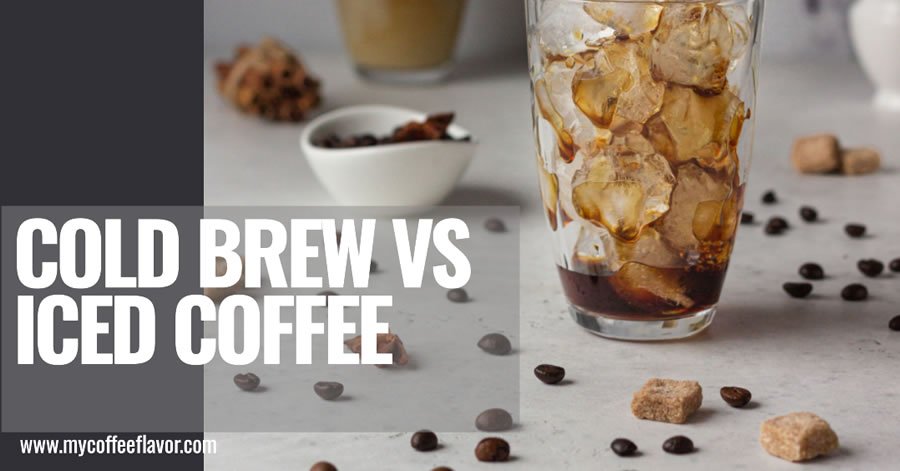
If you don’t want to make your coffee at home, consider the price here: Starbucks cold brew vs iced coffee price
Quick Recipes for Both
Iced Coffee (The Flash Chill Method)
Here is how to make iced coffee at home:
- Brew coffee at double strength (2 tablespoons coffee per 6 ounces water)
- Fill a glass completely with ice
- Pour hot coffee directly over the ice
- Add milk or sugar if desired
- Drink immediately
Cold Brew (The Mason Jar Method)
Here is how to make cold brew coffee at home:
- Combine 1 cup coarsely ground coffee with 4 cups cold water in a large jar
- Stir gently to saturate all grounds
- Cover and let sit at room temperature for 12-24 hours (18 is my sweet spot)
- Strain through a fine-mesh sieve lined with cheesecloth or a paper filter
- Store concentrate in refrigerator for up to 2 weeks
- To serve: Fill glass with ice, add equal parts cold brew concentrate and water or milk

Cold Brew vs. Other Coffee Drinks
Cold Brew vs Espresso
These two couldn’t be more different.
| Feature | Cold Brew | Espresso |
|---|---|---|
| Brew time | 12-24 hours | 25-30 seconds |
| Water temp | Cold | Hot (195-205°F) |
| Pressure | None | 9 bars of pressure |
| Concentration | Moderate (1:4 ratio) | Very high (1:2 ratio) |
| Serving size | 8-16 oz (diluted) | 1-2 oz shot |
| Caffeine per oz | Lower (diluted) | Much higher |
| Flavor | Smooth, low acid, sweet | Intense, bold, complex |
| Best for | Sipping, batch brewing | Lattes, quick caffeine hit |
Can you substitute one for the other? Not really. Cold brew lacks the crema, intensity, and body of espresso. Use cold brew for drinking; use espresso for milk drinks.
Cold Brew vs Iced Latte
This is a common source of confusion.
| Feature | Cold Brew | Iced Latte |
|---|---|---|
| Base | Cold brew concentrate + water | Espresso |
| Milk | Optional (often served black or with splash) | Required (mostly milk) |
| Ratio | Mostly coffee | Mostly milk |
| Flavor | Coffee-forward, smooth | Milky, espresso-forward |
| Caffeine | Moderate (depends on dilution) | Moderate (one or two shots) |
| Best for | Black coffee lovers | Milk drink lovers |
The simple difference: An iced latte is espresso plus lots of cold milk over ice. Cold brew is just coffee—concentrated and smooth—that you can drink black or with a splash of milk.
Pro tip: If you want a cold brew latte, make cold brew concentrate, then add milk in a 1:1 ratio. It’s not traditional, but it’s delicious.
Starbucks Cold Brew vs Iced Coffee Caffeine
Starbucks is where many people encounter both drinks. Here’s how they compare:
| Drink | Size | Caffeine |
|---|---|---|
| Starbucks Cold Brew | Tall (12 oz) | 155 mg |
| Starbucks Cold Brew | Grande (16 oz) | 205 mg |
| Starbucks Cold Brew | Venti (24 oz) | 310 mg |
| Starbucks Iced Coffee | Tall (12 oz) | 120 mg |
| Starbucks Iced Coffee | Grande (16 oz) | 165 mg |
| Starbucks Iced Coffee | Venti (24 oz) | 235 mg |
Key takeaways:
- Cold brew has 25-30% more caffeine than iced coffee at Starbucks
- The difference grows with size (Venti cold brew has 310mg vs 235mg for iced coffee)
- Starbucks Cold Brew is undiluted concentrate—no extra water added
- Starbucks Iced Coffee is brewed double-strength hot, then chilled
Why the difference? Starbucks uses a proprietary cold brew blend and brewing method that extracts more caffeine than their standard iced coffee. The cold brew concentrate is served straight, not diluted further.
For reference: A standard 8 oz cup of hot brewed coffee has about 95mg of caffeine. So a Grande Cold Brew (205mg) is roughly equivalent to two cups of regular coffee
Conclusion
When it comes to cold brew and iced coffee, there are distinct differences in their brewing methods and resulting flavors. Cold brew is created through a longer steeping process, resulting in a milder taste, lower acidity, and stronger caffeine content. On the other hand, iced coffee is made using traditional hot brewing methods but quickly cooled, allowing the retention of coffee bean flavors with the potential for more pronounced acidity.
Ultimately, the choice between cold brew and iced coffee comes down to personal preference. Consider the flavor profiles, strength, caffeine content, and serving styles that align with your taste preferences. Both beverages offer unique and enjoyable experiences, so don’t hesitate to explore and experiment with different brewing methods, flavors, and customizations to find your perfect cup.
Ready to explore more? Check out these related guides:
- The Ultimate Guide to Cold Brew Coffee Ratios
- How to Make Flavored Cold Brew: Vanilla, Caramel, Hazelnut, and More
- Why Is My Coffee Bitter? 7 Common Mistakes and How to Fix Them (cold brew is naturally less bitter!)
- 5 Amazing Coffee Drinks You Can Make with Instant Coffee (including iced instant recipes)
Frequently Asked Questions
Can you make cold brew with any coffee?
Yes, but medium to dark roasts work best. Light roasts can taste flat and muted when cold brewed because their delicate floral and fruity notes don’t extract well in cold water. Medium and dark roasts—with their chocolate, nut, and caramel notes—shine in cold brew.
Does cold brew expire?
Cold brew concentrate stays fresh in the refrigerator for up to two weeks. After that, it starts to lose flavor and can develop off-tastes. Ready-to-drink cold brew (already diluted) lasts about 3-5 days. Always store in an airtight container.
Why does cold brew cost more at coffee shops?
Because it requires more beans and more time. Cold brew uses roughly double the coffee grounds as hot coffee for the same final volume. Plus the 12-24 hour steep time and straining labor add to the cost. At home, you can make it for a fraction of the price.
Is cold brew stronger than iced coffee?
In terms of caffeine per ounce, yes—but most people dilute it.
Undiluted cold brew concentrate has about twice the caffeine of regular coffee
Most people dilute cold brew 1:1 with water or milk before drinking
Diluted cold brew (8 oz): 100-150 mg caffeine
Iced coffee (8 oz): 95 mg caffeine
Undiluted cold brew (8 oz): 190+ mg caffeine
The bottom line: Undiluted cold brew is much stronger. Diluted cold brew is slightly stronger than iced coffee. Most coffee shops serve cold brew diluted.
Is cold brew healthier than iced coffee?
In several ways, yes—but what you add to it matters most.
Where cold brew wins:
– 65% lower acidity – gentler on stomach and tooth enamel
– Naturally sweeter – needs less added sugar
– Less bitter – smoother drinking experience
– Less likely to trigger heartburn or acid reflux
The catch: Coffee shop cold brews often come loaded with sweeteners and cream. A plain cold brew is healthy. A flavored sweet cream cold brew can have 200+ calories and 30g+ sugar.
The verdict: Black cold brew is healthier than black iced coffee. Add sugar or cream to either and the benefits disappear.
Does cold brew taste like iced coffee?
Not really. They’re distinctly different.
Cold brew: Smooth, low acidity, naturally sweet, heavy body, chocolate/nut/caramel notes
Iced coffee: Bright, higher acidity, bitter without sugar, light body, tastes like your hot coffee (just cold)
Can you make them taste similar? Add milk and sugar to both, and the differences shrink—but cold brew will still be noticeably smoother.
My story: A friend who “didn’t like coffee” drank my cold brew and asked what was in it because it didn’t taste like coffee to her. That’s the cold brew effect.
About the Author
Written by RHALMI Mohammed — ten years of hands-on coffee obsession, testing brewing methods, comparing gear, and chasing the perfect cup at home. Every recipe, comparison, and guide on My Coffee Flavor comes from actual brewing, not just research.