

In the article below, we will try to answer the question: “Why was coffee banned in Mecca?”. But if you are in a hurry and want a quick answer here it is:
Many people wonder why coffee was banned in Mecca. They want to know the real reasons behind the ban. While it’s true that coffee was banned in Mecca in 1511, the ban was relatively short-lived and was lifted within a few years. In fact, in 1524, the Ottoman Turkish Sultan Suleiman I overturned the ban. While some sources suggest that the Ottoman Empire imposed a wider ban on coffee, there is no concrete evidence to suggest that the ban ever specifically applied to Mecca. The reasons for the ban are often attributed to religious objections from some Islamic scholars. They believed that coffee was a form of intoxication and therefore prohibited by Islamic law. However, others suggest that there may have been political motivations behind the ban as well.
Table of Contents
Introduction
Coffee is enjoyed by millions of people every day, with many considering it an essential part of their daily routine. However, there is a popular belief that coffee was banned in Mecca, the birthplace of Islam, for a period of time. This article will explore the history of coffee in Mecca, the rumors surrounding the supposed ban, and the truth behind them.
Origin of coffee
There are three theories about the origin of coffee:
- The first legend says that the origin of coffee comes from the highland forests of Ethiopia. According to a popular legend, a goat herder named Kaldi noticed his goats acting strangely after eating red berries from the nearby bushes. Feeling curious, Kaldi tried the berries himself and felt an energizing effect. Kaldi’s wife urged him to take the berries to the nearby monastery, where the Abbot initially dismissed them as the “Devil’s work”. However, when the berries were roasted, the aroma was enticing, and the Abbot decided to try the beverage, which was then named coffee.
- Other sources suggest that coffee originated from the Arabian Peninsula, where it was cultivated in Yemen around 575 AD. An Islamic legend tells of Sheikh Omar discovering coffee growing wild in Yemen.
- Others suggest that Sudanese slaves may have introduced coffee to Yemen. According to this theory, the slaves brought the coffee plant with them from their homeland, where it was already being used for its stimulating properties. However, this theory is not as widely accepted as the other two. It has less historical evidence to support it.
Regardless of its origin, coffee wasn’t enjoyed as a beverage until the 10th century, and two Arabian philosophers, Rhazes and Avicenna of Bukham, referred to a drink called “bunchum”, which many believe was coffee.
Coffee and Islam
The Arabic word “qahwah” is said to be the root of the word “coffee.” While some etymologists trace it back to the “wine of the bean,” others suggest that it may have originated from “Kaffa,” a region in Ethiopia where the plant is native. Interestingly, coffee is referred to as “būno” in Kaffa, which was later adopted into Arabic as “bunn” or “raw coffee.” “Qahwah” was eventually borrowed into Turkish as “kahve” and then into Dutch as “koffie,” which eventually became the English word “coffee.”
Despite its popularity in Islamic societies, there has been some debate over whether coffee is considered haram (forbidden) or halal (permissible) in Islam. Some Islamic scholars have expressed concerns about the potential for coffee to be addictive and cause a state of intoxication. The majority of scholars, however, have deemed it to be permissible. They don’t see any religious reasons to forbid it as long as it is consumed in moderation and does not have any harmful effects on the body or mind.
Coffee later played a significant role in social and religious customs. Coffeehouses were established in Islamic countries, where people could gather to drink coffee, socialize, and discuss religious and political matters.
Coffee also played a role in Islamic spirituality. Sufi mystics, who were an influential group within Islamic society, would use coffee as a means of staying awake during long periods of prayer and meditation. The stimulating effects of coffee were believed to help them maintain a heightened state of awareness and connection with God.
The History of Coffee in Mecca
Mecca, the birthplace of Islam, was no exception to the popularity of coffee. Coffee houses were established in the city. These houses quickly became social hubs where people would gather to drink coffee, socialize, talk about politics, and even conduct business.
The reason behind coffee’s popularity in Mecca may be attributed to its effect. Because the Quran prohibits Muslims from consuming alcohol, coffee became a preferred alternative in Islamic countries due to its soothing, invigorating, and uplifting properties.
The Rumor of the Coffee Ban in Mecca
Despite the popularity of coffee in Mecca, there is a popular belief that coffee was banned in the city for a period of time. According to the rumor, coffee was banned in Mecca by the ruling Ottoman Empire in 1511.
Why was coffee banned in Mecca?
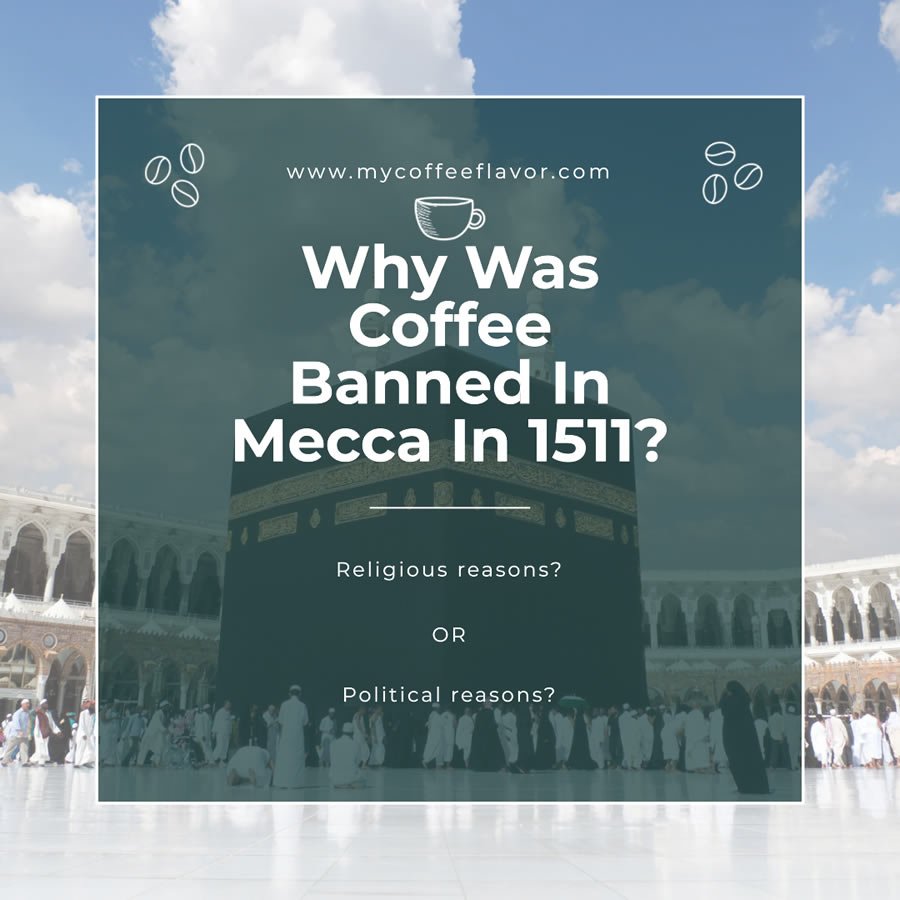
Why was coffee banned in Mecca? There are two hypotheses about the coffee ban in Mecca
- Political reason: The ban was supposedly imposed because the Ottoman governor, Khair Beg, believed that coffee was a stimulant that encouraged political dissent and rebellion.
- Intoxication: Another supposed reason for the ban is attributed to religious objections from some Islamic scholars who believed that coffee was a form of intoxication and therefore prohibited by Islamic law.
The Truth Behind the Rumor
While it is true that the Ottoman Empire did impose a ban on coffee in 1511, there is no evidence to suggest that the ban ever applied to Mecca. In fact, Mecca continued to be a center of coffee culture throughout the period of the supposed ban.
The Ottoman Empire’s ban on coffee was short-lived and was lifted within a few years, in 1524. The supposed reasons for the ban attributed to religious beliefs or fear of political insurrection didn’t stand the test of time. The popularity of coffee continued to grow throughout the Islamic world.
Conclusion
Coffee has been an important part of Islamic culture for centuries. Mecca, the birthplace of Islam, has played a significant role in its history. While there is a popular belief that coffee was banned in Mecca, there is no evidence to support this claim. The Ottoman Empire’s ban on coffee was short-lived and did not apply to Mecca. Coffee houses in Mecca continued to thrive, and coffee remained an essential part of Islamic culture.
FAQs
Was coffee ever really banned in Mecca?
There is no evidence to suggest that coffee was ever banned in Mecca. While the Ottoman Empire did impose a ban on coffee in the late 16th century, there is no evidence to suggest that the ban ever applied to Mecca.
Why was coffee banned in Mecca?
The Ottoman Empire’s ban on coffee was not due to any perceived political threat but rather because of religious objections. Some Islamic scholars believed that coffee was a form of intoxication and therefore prohibited by Islamic law.
Was the ban on coffee successful?
The ban on coffee was short-lived and was lifted within a few years. Despite the ban, the popularity of coffee continued to grow throughout the Islamic world.
What is the history of coffee in Islamic culture?
Coffee has been an integral part of Islamic culture for centuries. It is believed that coffee was first discovered in the Ethiopian highlands. It was then brought to the Arabian Peninsula in the 15th century. It quickly became a popular beverage. The word “coffee” itself is derived from the Arabic word “qahwah,” which originally referred to a wine-like beverage made from the berries of the Coffea plant.
About the Author
Written by RHALMI Mohammed — ten years of hands-on coffee obsession, testing brewing methods, comparing gear, and chasing the perfect cup at home. Every recipe, comparison, and guide on My Coffee Flavor comes from actual brewing, not just research.